


Asked to Attend a Police Interview in Scotland? Do Not Decide What to Say Before You Get Legal Advice
The words “no comment” have been back in the Scottish headlines this summer after renewed public debate about a high-profile police interview.
The commentary has often treated silence as suspicious: if someone has nothing to hide, why would they not simply answer the questions?
That is not how a criminal defence solicitor should approach a police interview.
In Scotland, a suspect has the right to remain silent. You do not have to answer police questions beyond providing certain basic personal details, and anything you do choose to say can be recorded and later used as evidence. You are also entitled to have a solicitor present while you are interviewed. Scottish Government guidance confirms both protections.
The practical advice is simple:
Do not decide to talk. Do not decide to say “no comment”. Speak to a criminal defence solicitor first.
A Police Interview Is Not Your Chance to “Clear Things Up”
This is where people can get themselves into trouble.
You may have been asked to attend voluntarily. You may believe the allegation is ridiculous. You may know you have done nothing wrong.
So the instinct is to explain everything.
Unfortunately, you are walking into an interview without necessarily knowing the evidence already held by the police, what another witness has said, how a particular question fits into the wider investigation or where an apparently harmless answer may lead.
The Scottish Government’s own guidance is explicit: you have the right not to answer police questions, and anything you do say may be used as evidence if the case reaches court.
A police interview is therefore not an informal conversation.
It is part of a criminal investigation.
“No Comment” Is Not Automatically the Right Answer Either
The opposite mistake is to read something online and decide that everyone should simply refuse to answer every question.
That is not sensible legal advice.
There will be cases where remaining silent is entirely appropriate. There will be others where answering particular questions, providing an explanation or putting important information on record may be strategically better.
The decision depends on the allegation, the evidence available, what the police disclose and the particular circumstances of the person being interviewed.
Recent Scottish legal commentary has correctly highlighted that silence in a police interview does not carry the same adverse-inference regime familiar from England and Wales. Exercising the right to silence is a legal protection, not an admission of guilt.
But the important word is advice.
A solicitor is not there simply to sit beside you while you say “no comment”. They are there to understand what you are facing and advise you on what, if anything, should be said.
Use the Right Before You Need the Defence
Scottish law gives a person reasonably suspected of an offence the right to have a solicitor present during police interview. Government guidance also confirms that someone in police custody can speak privately to a solicitor and have that solicitor present when questioned.
Use that right.
At Ross Harper, we connect people facing criminal allegations with experienced Scottish criminal defence solicitors. The earlier a lawyer becomes involved, the sooner they can understand the allegation, speak to the police where appropriate and advise you before answers are committed to an interview record. Ross Harper’s live criminal-defence page specifically encourages people to take legal advice before speaking to the authorities and confirms its 24/7 criminal hotline.
Waiting until after the interview means your solicitor inherits whatever has already been said.
Sometimes that can be dealt with.
Sometimes it becomes part of the problem.
If the Police Want to Speak to You, Speak to a Solicitor First
Being asked to attend a police interview does not mean you are guilty, and taking legal advice does not make you look guilty. Official Scottish guidance expressly says speaking to a solicitor does not suggest you have done anything wrong.
It means you are treating a criminal investigation with the seriousness it deserves.
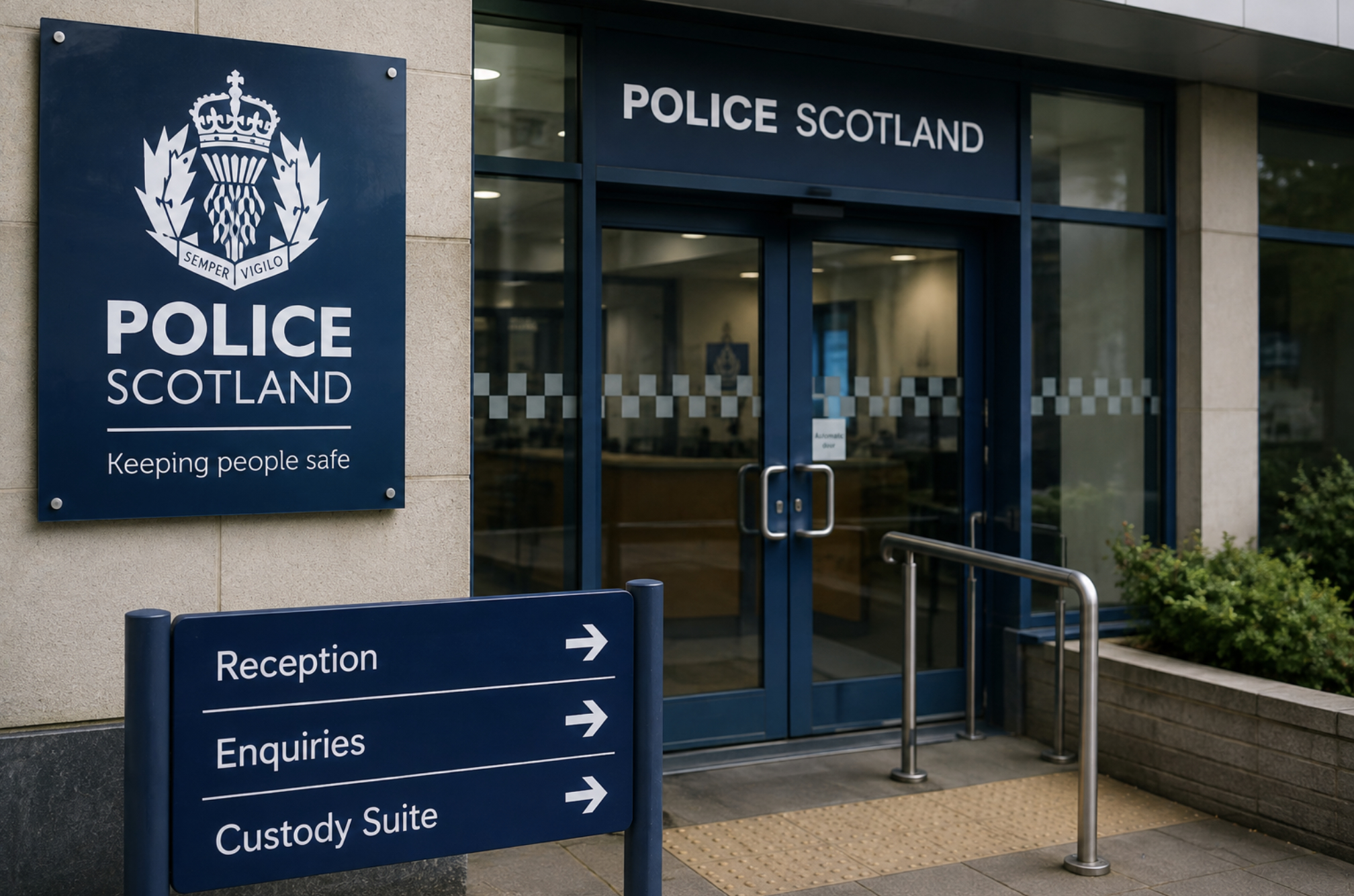
If Police Scotland want to interview you — whether you have been arrested or asked to attend voluntarily — do not guess your way through it and do not choose your interview strategy from something you read online.
Speak to Ross Harper before you answer police questions. Call our criminal defence line on 0800 11 12 13 or contact us online and get the right lawyer involved from the start. The number and criminal-defence contact route are currently live on the Ross Harper website.